
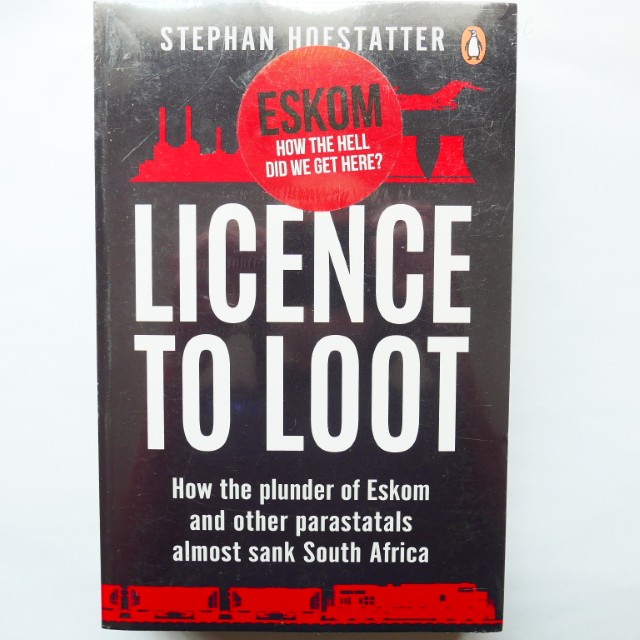
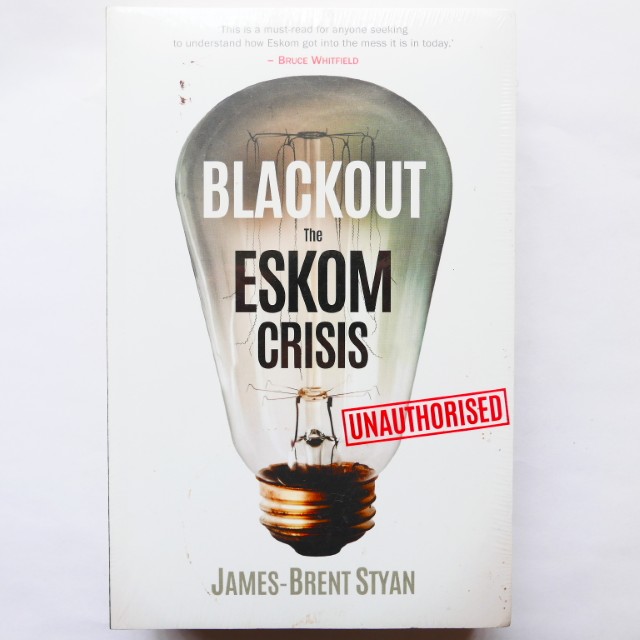
Eskom – How the hell did we get here? : License to loot by Stephan Hofstatter & Blackout – The Eskom Crisis by James Brent Styan
R120,00
Secondhand Paperback New.
Two Books together Still in Wrapping
Eskom, the giant power utility that drives the economy, holds the key to inclusive growth and shared prosperity in South Africa. Instead it has become the site of corruption so rampant that it threatens the entire country’s wellbeing. Award-winning journalist Stephan Hofstatter’s hard-hitting investigation traces the genesis of the Eskom looting spree from Transnet, where the blueprint for parastatal plunder was developed and refined with the help of top-dollar consultancies. From there he explores how the Gupta family extracted billions in suspected kickbacks from state contracts and scored hugely inflated coal contracts from backroom deals, and examines how Eskom’s top brass enriched themselves and their families at the power utility’s expense. Licence to Loot delves into the secrets of the fixers, deal makers and bribe masters behind this epic pillaging of the public purse, and maps out the intricate network of executives, board members and cabinet ministers who facilitated it. From clandestine meetings in London hotel rooms and visits to African dictators, to offshore tax havens, secret shell companies and private jets worth millions of dollars – not to mention a secret Dubai bolthole fit for a fleeing president – this book lifts the lid on a complex looting scheme that almost sank the South African economy.
A blow-by-blow account into the degeneration of Eskom from global energy power-house to dysfunctional monolith.
In 1998 the government was warned that the country was running out of electricity. Yet the decision was taken not to invest in new power stations. In 2007, as predicted, South Africa ran out of electricity.
Eight years later the crisis has deepened, and despite assurances by government, this has the potential to become the biggest post-apartheid crisis in South Africa. By 2015 load shedding cost the economy an estimated R2 billion per day.
Is the situation getting better or worse? Are the interventions working or is a blackout inevitable? What can be done and what do future scenarios look like?
Blackout – The Eskom Crisis by James Brent Styan
A blow-by-blow account into the degeneration of Eskom from global energy power-house to dysfunctional monolith.
In 1998 the government was warned that the country was running out of electricity. Yet the decision was taken not to invest in new power stations. In 2007, as predicted, South Africa ran out of electricity.
Eight years later the crisis has deepened, and despite assurances by government, this has the potential to become the biggest post-apartheid crisis in South Africa. By 2015 load shedding cost the economy an estimated R2 billion per day.
Is the situation getting better or worse? Are the interventions working or is a blackout inevitable? What can be done and what do future scenarios look like?
Blackout The Eskom Crisis gives compelling insight into each aspect of the energy crisis from load shedding to leadership, policy to politics to nuclear versus renewable energy and unpacks the debates raging in households across South Africa today.
1 in stock
Description
Secondhand Paperback New.
Two Books together Still in Wrapping
Eskom, the giant power utility that drives the economy, holds the key to inclusive growth and shared prosperity in South Africa. Instead it has become the site of corruption so rampant that it threatens the entire country’s wellbeing. Award-winning journalist Stephan Hofstatter’s hard-hitting investigation traces the genesis of the Eskom looting spree from Transnet, where the blueprint for parastatal plunder was developed and refined with the help of top-dollar consultancies. From there he explores how the Gupta family extracted billions in suspected kickbacks from state contracts and scored hugely inflated coal contracts from backroom deals, and examines how Eskom’s top brass enriched themselves and their families at the power utility’s expense. Licence to Loot delves into the secrets of the fixers, deal makers and bribe masters behind this epic pillaging of the public purse, and maps out the intricate network of executives, board members and cabinet ministers who facilitated it. From clandestine meetings in London hotel rooms and visits to African dictators, to offshore tax havens, secret shell companies and private jets worth millions of dollars – not to mention a secret Dubai bolthole fit for a fleeing president – this book lifts the lid on a complex looting scheme that almost sank the South African economy.
A blow-by-blow account into the degeneration of Eskom from global energy power-house to dysfunctional monolith.
In 1998 the government was warned that the country was running out of electricity. Yet the decision was taken not to invest in new power stations. In 2007, as predicted, South Africa ran out of electricity.
Eight years later the crisis has deepened, and despite assurances by government, this has the potential to become the biggest post-apartheid crisis in South Africa. By 2015 load shedding cost the economy an estimated R2 billion per day.
Is the situation getting better or worse? Are the interventions working or is a blackout inevitable? What can be done and what do future scenarios look like?
Blackout – The Eskom Crisis by James Brent Styan
A blow-by-blow account into the degeneration of Eskom from global energy power-house to dysfunctional monolith.
In 1998 the government was warned that the country was running out of electricity. Yet the decision was taken not to invest in new power stations. In 2007, as predicted, South Africa ran out of electricity.
Eight years later the crisis has deepened, and despite assurances by government, this has the potential to become the biggest post-apartheid crisis in South Africa. By 2015 load shedding cost the economy an estimated R2 billion per day.
Is the situation getting better or worse? Are the interventions working or is a blackout inevitable? What can be done and what do future scenarios look like?
Blackout The Eskom Crisis gives compelling insight into each aspect of the energy crisis from load shedding to leadership, policy to politics to nuclear versus renewable energy and unpacks the debates raging in households across South Africa today.
Additional information
| Weight | 750 g |
|---|---|
| Dimensions | 23 × 16 × 5 cm |
Related products
-

Africa’s Top Wildlife Countries by Mark W. Nolting
R40,00 Add to cart -

The New Finch Handbook by Christa Koepff
R50,00 Add to cart -
The Art of Diving: Adventures in the Underwater World by Nick Hanna & Alex Mustard
R100,00 Add to cart -
Two Oceans: A guide to the marine life of Southern Africa by Professor George Branch and others
R100,00 Add to cart