


World Encyclopedia of Naive Art by Oto Bihalji-Merin (Editor), Nebojša Tomašević
R500,00
Secondhand Hardcover in Very Good Condition
Published 1984
One of the most remarkable developments in art over the last hundred years has been the steadily increasing appreciation, by critics and public alike, of naïve painting and sculpture – especially the former. Douanier Rousseau started to exhibit has works in the Salon des Indépendants in Paris in the mid-1880s and won for naïve art an acclaim previously denied to it. Naïve (or ‘modern primitive’) artists are usually quite untrained and ignorant of the academic rules of perspective; many have not come into contact with the traditional or official world of art at all. The delight which their work affords depends chiefly on the wonderful precision and detail with which they often depict their subjects, an instinctive sense of colour relationships, and a highly imaginative sense of atmosphere and composition. Many of these artists are peasants, who take their themes from village life, rural pursuits and local tradition; but many come from urban or industrial backgrounds which are similarly reflected in a wide range of subject-matter. Though many books have been devoted to individual artists, this is the first publication to provide an historical survey together with a comprehensive biographical dictionary of the artists themselves – both on an international scale. After discussing the gradual discovery of naïve art since the 1880s, he traces its evolution in North America, Latin America, Europe, Africa, Haiti, Japan, China and Australia, ending with an account of naïve sculpture. In the main part of the book the lives and works of more than 800 artists are discussed in alphabetically arranged entries, each written by a member of a team of 25 specialists. Each artist is represented by examples of his work reproduced in colour. Surveys of naïve art in the countries where it has assumed special importance conclude the book, together with an index of the artists classified under countries, and a bibliography.
1 in stock
Description
Secondhand Hardcover in Very Good Condition
Published 1984
One of the most remarkable developments in art over the last hundred years has been the steadily increasing appreciation, by critics and public alike, of naïve painting and sculpture – especially the former. Douanier Rousseau started to exhibit has works in the Salon des Indépendants in Paris in the mid-1880s and won for naïve art an acclaim previously denied to it. Naïve (or ‘modern primitive’) artists are usually quite untrained and ignorant of the academic rules of perspective; many have not come into contact with the traditional or official world of art at all. The delight which their work affords depends chiefly on the wonderful precision and detail with which they often depict their subjects, an instinctive sense of colour relationships, and a highly imaginative sense of atmosphere and composition. Many of these artists are peasants, who take their themes from village life, rural pursuits and local tradition; but many come from urban or industrial backgrounds which are similarly reflected in a wide range of subject-matter. Though many books have been devoted to individual artists, this is the first publication to provide an historical survey together with a comprehensive biographical dictionary of the artists themselves – both on an international scale. After discussing the gradual discovery of naïve art since the 1880s, he traces its evolution in North America, Latin America, Europe, Africa, Haiti, Japan, China and Australia, ending with an account of naïve sculpture. In the main part of the book the lives and works of more than 800 artists are discussed in alphabetically arranged entries, each written by a member of a team of 25 specialists. Each artist is represented by examples of his work reproduced in colour. Surveys of naïve art in the countries where it has assumed special importance conclude the book, together with an index of the artists classified under countries, and a bibliography.
Additional information
| Weight | 3600 g |
|---|---|
| Dimensions | 30 × 24 × 7 cm |
Related products
-
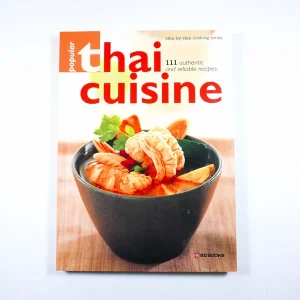
Popular Thai Cuisine: 111 Authentic and Reliable Recipes by Sisamon Kongpan
R80,00 Add to cart -

Rogue: The Inside Story of SARS’s Elite Crime-busting Unit by Johann van Loggerenberg
R100,00 Add to cart -
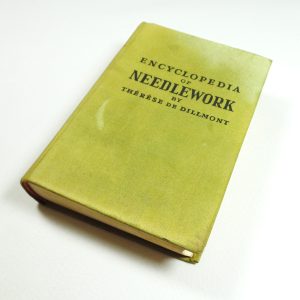
Encyclopedia of Needlework by Thérèse de Dillmont
R180,00 Add to cart -

The Hulton Getty Picture Collection. Decades 1920, 1930, 1940 & 1950
R400,00 Add to cart